

Program

Program

πŸ“… May 19–21, 2027πŸ“ Ostrava, Czech RepublicπŸ›οΈ VSB-TU Ostrava campus

Invited Lectures

Featured talks by invited speakers.

From Signal Lab to Space: Where Advanced Signal Processing Meets Industrial AI
Invited lecture

From Signal Lab to Space: Where Advanced Signal Processing Meets Industrial AI

Radek Martinek

From industrial machines and intelligent manufacturing systems to satellites and space missions, signals carry valuable information about the physical world. However, transforming raw measurements into reliable knowledge remains a major engineering challenge, even in the era of artificial intelligence. This lecture presents the journey of Signal Lab at VSB–Technical University of Ostrava, connecting fundamental research in advanced signal processing with industrial AI, embedded intelligent systems, and emerging space applications. Drawing on selected research projects and real-world collaborations, the lecture demonstrates how advanced sensing, signal processing, machine learning, physics-informed AI, and digital twins can be combined to address complex engineering problems. Examples range from industrial condition monitoring, fault diagnosis, and predictive maintenance to intelligent mobility and experimental technologies being developed for space missions, including research associated with the International Space Station and lunar exploration. Particular attention is given to the challenges of transferring research beyond the laboratory: noisy and incomplete measurements, changing operating conditions, computational limitations, and the need for reliable and explainable results. The central message is that successful AI does not begin with an algorithm, but with understanding the physical system and the signals it produces. By connecting measurement technologies, fundamental research, intelligent algorithms, and practical engineering, Signal Lab demonstrates how scientific ideas can evolve into real-world solutions β€” from factory floors to space missions.
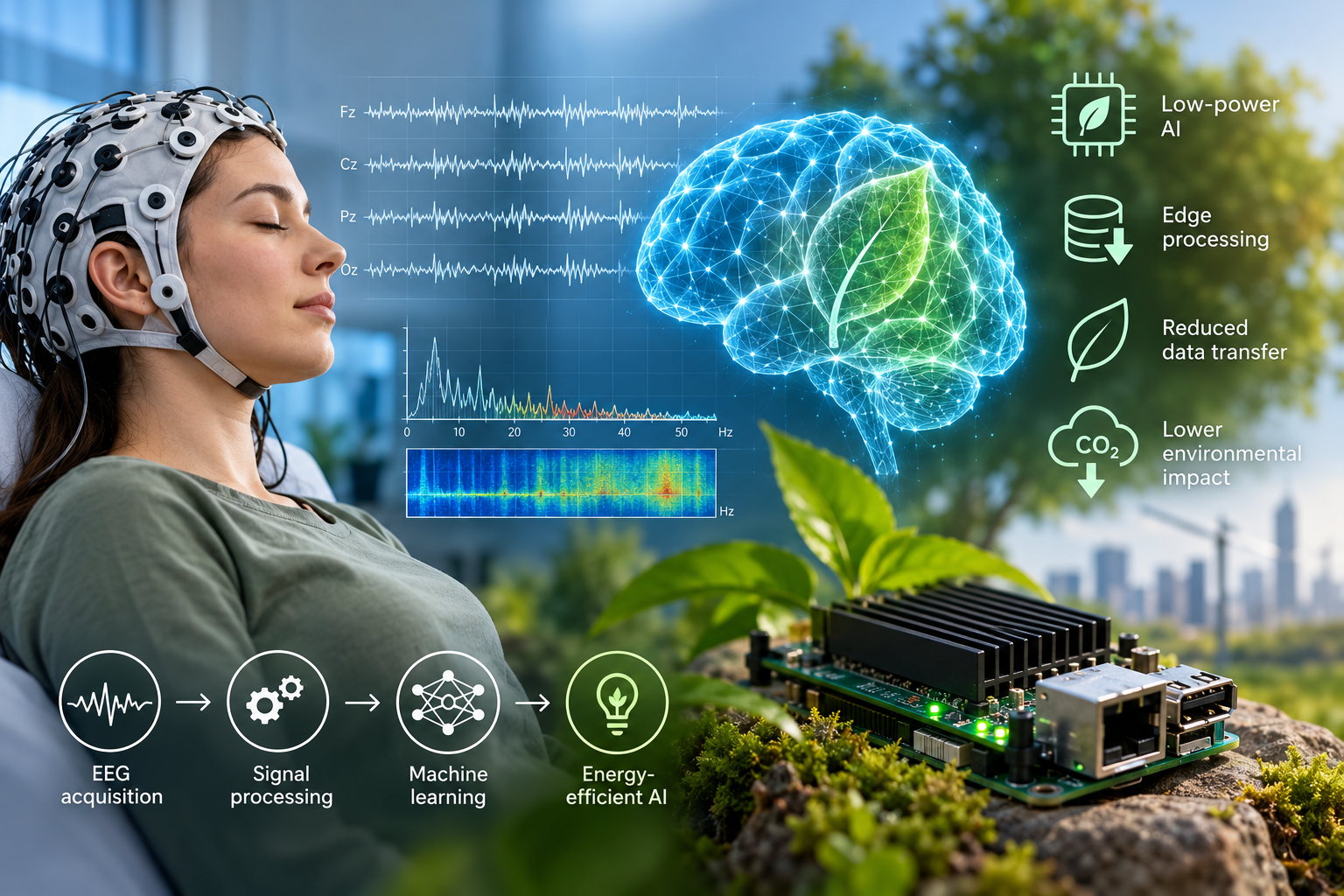
Small Signals, Small Models, Small Devices: A Green AI Perspective on Embedded Biosignal Processing
Invited lecture

Small Signals, Small Models, Small Devices: A Green AI Perspective on Embedded Biosignal Processing

Aleksandra Kawala-Sterniuk

Green AI has emerged as a response to the growing energy footprint of machine learning, yet much of the discussion remains focused on large-scale models and data centres. Embedded biomedical systems have faced the same constraints for decades - not as an environmental choice, but as an engineering necessity.Drawing on long-standing work with low-cost, non-invasive EEG-based brain–computer interfaces, this lecture argues that resource-constrained biosignal processing offers a practical model for sustainable AI. It examines where computational effort genuinely pays off and where it does not: the comparison of classical filtering and smoothing approaches against far heavier learning-based alternatives, the cost of acquiring and transmitting data versus processing it at the edge, and the recurring observation that careful signal conditioning often outperforms model complexity. The lecture also addresses the uncomfortable side of this comparison - accuracy obtained from artefacts rather than from physiological activity, which is expensive in every sense. The aim is to propose energy and data frugality as design criteria of equal standing to accuracy in embedded biomedical systems.

Preliminary Programme

A draft overview of the three conference days. Times and sessions are subject to confirmation.

Wednesday, May 19

08:00–11:00
Registration Registration
09:00–09:15
Conference activity Opening ceremony
09:15–10:00
Invited lecture Invited lecture 1
10:00–10:45
Invited lecture Invited lecture 2
10:45–11:00
Coffee break Coffee break
11:00–12:30
Oral presentation Oral presentations 1
12:30–13:30
Lunch Lunch
14:00–18:00
Oral presentation Oral presentations 2
19:00–23:00
Conference activity Social dinner

Thursday, May 20

09:00–12:00
Oral presentation Oral presentations 3
12:00–13:30
Lunch Lunch

Friday, May 21

08:00–09:00
Conference activity Poster Session Preparation
09:00–11:30
Poster session Poster session
11:30–12:00
Conference activity Closing ceremony
12:00–13:00
Lunch Lunch